
Joint Replacement Surgery in Thane
Joint replacement surgery in Thane for knees, hips and shoulders, explained side by side, so you can see which operation fits your joint, your age and your daily life.
What Is Joint Replacement Surgery?
For people with crippling joint pain caused by arthritis, an injury or wear over many years, joint replacement surgery can change their life. The damaged surfaces of the joint are removed and replaced with artificial parts made of metal, medical-grade plastic or ceramic. The new joint moves smoothly again, which relieves pain and restores movement.
Joint replacement is one of the most successful operations in medicine. Most patients report a large reduction in pain and a more stable joint, so they can return to everyday tasks that had become uncomfortable or impossible: walking to the market, climbing stairs, travelling to see family, or simply sleeping through the night.
With careful planning before surgery, an operation suited to the individual and committed rehabilitation afterwards, joint replacement is a very reliable way to regain comfort and independence.
Which of These Sounds Like You?
- “My whole knee aches, it has started to bend, and stairs and getting up from a chair are hard.”Total Knee Replacement
- “The pain is mostly on the inner side of my knee, and the rest of the knee feels fine.”Partial Knee Replacement
- “My hip or groin hurts when I walk, and putting on socks has become difficult.”Total Hip Replacement
- “My elderly parent fell and cannot stand or put weight on the leg.”Hemi Hip Replacement
- “My shoulder is painful and stiff, and I struggle to lift my arm or sleep on that side.”Shoulder Replacement
- “I already have a knee or hip replacement, and it has become painful or unstable.”Revision Joint Arthroplasty
The Operations Compared
| Procedure | Who It's For | Hospital Stay | Typical Recovery |
|---|---|---|---|
| Total Knee Replacement | Severe arthritis across the knee | 4 to 5 days | Walking unaided in 6 weeks to 3 months |
| Partial Knee Replacement | Arthritis in one part of the knee only | 1 to 3 days | Most activities in 4 to 6 weeks |
| Total Hip Replacement | Hip arthritis or avascular necrosis | 3 to 5 days | Most activities in 6 to 12 weeks |
| Hemi Hip Replacement | Older adults with a broken hip | 4 to 7 days | About 3 months |
| Shoulder Replacement | Shoulder arthritis or irreparable rotator cuff tears | 2 to 3 days | Most activities by 3 months |
| Revision Joint Replacement | A failed earlier knee or hip replacement | 5 to 7 days | 3 to 6 months |
- Who It's For
- Severe arthritis across the knee
- Hospital Stay
- 4 to 5 days
- Typical Recovery
- Walking unaided in 6 weeks to 3 months
- Who It's For
- Arthritis in one part of the knee only
- Hospital Stay
- 1 to 3 days
- Typical Recovery
- Most activities in 4 to 6 weeks
- Who It's For
- Hip arthritis or avascular necrosis
- Hospital Stay
- 3 to 5 days
- Typical Recovery
- Most activities in 6 to 12 weeks
- Who It's For
- Older adults with a broken hip
- Hospital Stay
- 4 to 7 days
- Typical Recovery
- About 3 months
- Who It's For
- Shoulder arthritis or irreparable rotator cuff tears
- Hospital Stay
- 2 to 3 days
- Typical Recovery
- Most activities by 3 months
- Who It's For
- A failed earlier knee or hip replacement
- Hospital Stay
- 5 to 7 days
- Typical Recovery
- 3 to 6 months
To see how the operation itself is carried out, from anaesthesia to the implants used, read Joint Arthroplasty: How the Surgery Works.
When to Consider a Joint Replacement
A joint replacement is worth discussing when:
- Arthritis has been confirmed on X-rays
- Pain limits your walking, work, sleep or time with family
- Medicines, physiotherapy, weight loss and injections no longer give you enough relief
- The joint is becoming stiff or deformed
There is no fixed age for a joint replacement. What matters is how much the joint is affecting your life, and whether you are fit enough for the operation and the rehab that follows.
Dr. Gadkari’s Approach
Dr. Gadkari trained in joint replacement at Fair Oaks Hospital in the United States, and as a fellow at Bombay Hospital and at Apollo Hospital in Bengaluru. Yet he will always look first at whether you can avoid or delay an operation.
When surgery is the right choice, he explains which replacement suits your joint and why, what the recovery involves for you and your family, and what results you can realistically expect.
Understand Your Diagnosis
He goes through your X-rays and scans with you, so you know exactly what is wrong and why.
Try Non-Surgical Care
Medicines, physiotherapy, weight and activity changes come first, for as long as they help.
Operate When It Helps
Surgery is advised only when it will clearly improve your pain and daily life.
Preparing for a Joint Replacement
Good preparation makes recovery smoother:
- Fitness checks: blood tests, an ECG and a physician’s review, with diabetes and blood pressure well controlled.
- Exercises before surgery: strengthening the muscles around the joint helps you recover faster.
- Home set-up: a firm chair with arms, a western toilet or raised seat, a clear path free of loose rugs, and a bed of normal height.
- A helper: a family member to support you for the first week or two at home.
- Insurance approval: the hospital’s insurance desk can usually arrange cashless approval in advance.
Life After a Joint Replacement
Most people return to walking, travel, gardening and light exercise. Low-impact activities such as walking, cycling, swimming and yoga suited to your new joint are encouraged. High-impact activities such as running and jumping sports put extra wear on the implant and are best avoided.
Modern joint replacements usually last 15 to 20 years, and many last longer with sensible activity and a healthy weight.
If a Replacement Wears Out
Over time, an artificial joint can wear out or fail, because of loosening, dislocation or infection. As people live longer, some outlive their original implant and need a second operation, called a revision joint replacement. Regular check-ups help spot problems early.
Before and After X-Rays
Total Knee Replacement
Worn-out knee joints from arthritis, and the knee after a total knee replacement.
Pending Medical Review
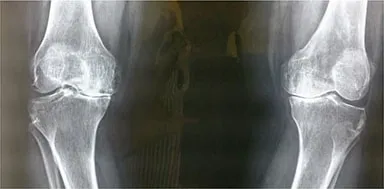
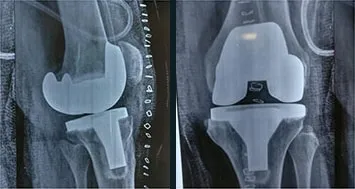
From Dr. Gadkari's own cases. Identifying details have been removed. Every patient's result is different.
“Your skill, dedication, and compassionate approach have made a remarkable difference in my recovery and overall well-being.”
Read the original Google review, 2025 (opens in a new tab)
Frequently Asked Questions
Is joint replacement covered by health insurance?
Most health insurance policies in India cover joint replacement when it is medically needed. Check your policy for waiting periods, room-rent limits and any co-payment. The hospital's insurance desk can usually arrange cashless approval before you are admitted.
Which hospital should I choose for my operation?
Dr. Gadkari operates at several hospitals in Thane. The right one for you depends on your insurance network, how far your family has to travel, and any other medical needs you have. The clinic will help you decide at your consultation.
How long does a joint replacement last?
Modern knee and hip replacements last many years. Most are still working well 15 to 20 years after surgery, and many last longer. Keeping a healthy weight and staying active with low-impact exercise such as walking, cycling and swimming helps them last.
Will my joint replacement need revision one day?
Most people never need a revision. A small number of replacements wear, loosen or become infected over the years, which is why regular check-ups and X-rays are useful. See a doctor if a replaced joint becomes painful, unstable or swollen after a long period of comfort.
Book a Consultation
Talk to Dr. Gadkari about joint replacement. Message the clinic on WhatsApp or call, and they will find a time and place that suits you.
Pending Medical Review: Dr. Gadkari has not yet approved this page.