
Revision Joint Arthroplasty
Revision joint replacement in Thane replaces part or all of an earlier knee or hip replacement that has loosened, become unstable or become infected.
At a Glance
Pending Medical Review
- Who It's For
- People whose earlier knee or hip replacement has worn, loosened, dislocated or become infected
- Anaesthesia
- Spinal or general anaesthesia, often with a nerve block
- Hospital Stay
- Usually 5 to 7 days, longer if there is infection
- Walking Again
- Often with a walker within a few days; weight-bearing may be limited at first
- Full Recovery
- 3 to 6 months, sometimes longer than after the first operation
Typical figures. Your own plan depends on your health, age and the joint involved.
What Is Revision Joint Arthroplasty?
Joint replacement surgery for knee and hip joints affected by arthritis is mostly successful. It restores the joint’s function and relieves pain for nearly all patients who have it. But over time, an artificial joint can wear out or fail for different reasons.
A revision joint replacement, also called revision arthroplasty, is the operation done to replace a worn or failed joint replacement. As people live longer and more people have joint replacements, revision surgery is becoming more common, because some people outlive their original implant.
Revision is usually a more complex operation than the first replacement. The old implant has to be removed carefully, some bone may have been lost, and special implants are often needed.
When Is It Needed?
These are the problems that most often lead to revision surgery.
Implant Loosening
This is the most common reason. When a joint is replaced, the new parts are cemented or fitted tightly into the bone. Over many years, friction can wear away tiny particles from the surfaces. The body reacts to these particles, which can weaken the bond between bone and implant. A loose implant causes pain and can feel unstable.
Joint Dislocation
Sometimes the new joint slips out of place. This happens more often after a hip replacement. It can be caused by scar tissue interfering with the joint, weak muscles around the joint, the position of the implant, or not following the precautions given after surgery.
Infection
If an infection takes hold around a joint replacement, it causes pain and swelling and usually needs revision surgery. With modern hospital standards and antibiotics, the risk of this kind of infection is low, but it can happen even years after the first operation.
Other Reasons
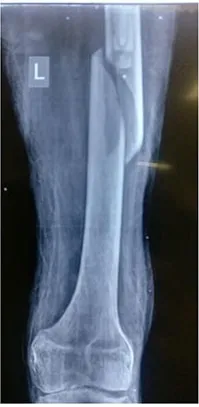
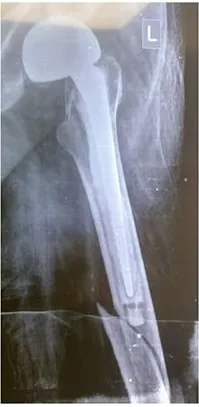
A fracture of the bone around the implant after a fall (a periprosthetic fracture), wear of the plastic surfaces, and a joint that stays very stiff can also need revision.
How the Problem Is Found
To find out why a joint replacement is failing, Dr. Gadkari compares new X-rays with older ones, and may arrange blood tests that look for signs of infection. Sometimes fluid is drawn from the joint with a needle to test it, and a CT or bone scan can show how the implant is sitting. Knowing the exact cause is essential, because a loose implant and an infected implant are treated differently.
The Surgery, Step by Step
Planning
Detailed X-rays and scans help plan which parts need replacing and what special implants or bone grafts may be needed.
Removing the Old Implant
The worn or loose parts are removed carefully to save as much healthy bone as possible.
Rebuilding the Bone
Bone that has been lost may be built up with bone graft or with metal blocks called augments.
Fitting the New Implant
Revision implants often have longer stems that reach further into healthy bone for a firm hold.
Treating Infection
If the joint is infected, the revision is often done in two stages: first removing the implant and fitting a temporary spacer loaded with antibiotics, then fitting the new joint after the infection has cleared.
Your Recovery Timeline
Days 1 to 3
Standing and walking with a walker, sometimes with limited weight on the leg.
Days 5 to 7
Home once you walk safely; longer if antibiotics through a drip are needed.
Week 2
Stitches or clips removed. Exercises continue at home.
3 Months
Most people walk well with or without a stick.
6 Months and Beyond
Continued gains in strength and comfort.
Typical milestones. Everyone heals at a different pace, and your physiotherapist will adjust the plan to you.
Common Worries, Answered
Is revision harder than the first operation?
Yes, usually. It takes longer, there may be more blood loss, and recovery can be slower. That is why careful planning and experience with complex joint surgery matter.
Will the new joint last as long as the first?
Revision implants are designed for a firm, lasting hold, and most give many years of good function. Dr. Gadkari will explain what to expect for your joint.
Risks Explained Plainly
Revision surgery carries the same kinds of risk as a first joint replacement, but generally at a higher level, because the operation is bigger:
- Infection, especially if the first joint was infected.
- Blood clots in the leg veins.
- Dislocation or instability of the new joint.
- Fracture of weakened bone during or after surgery.
- Ongoing pain or stiffness in some people.
Dr. Gadkari will talk through these risks with you and your family before you decide.
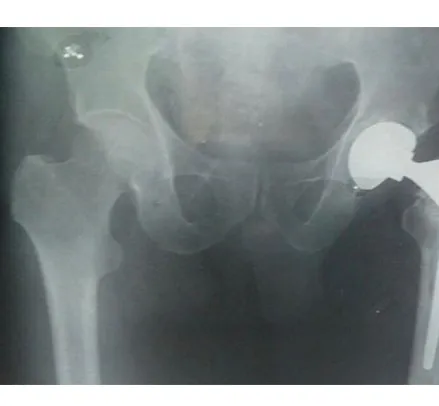
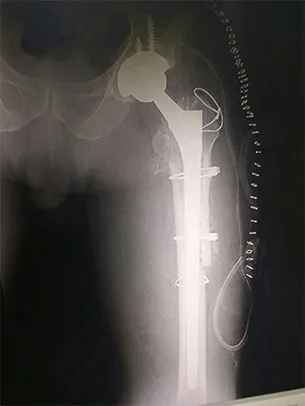
Before and After X-Rays
Complicated Hip Revision Replacement
An earlier hip replacement that needed to be redone, replaced with a longer revision implant.
Pending Medical Review
Fracture Around a Hip Implant
A thigh-bone fracture below an existing hip implant (a periprosthetic fracture), treated with a longer revision stem.
Pending Medical Review
From Dr. Gadkari's own cases. Identifying details have been removed. Every patient's result is different.
Frequently Asked Questions
Will my joint replacement need revision one day?
Most people never need a revision. A small number of replacements wear, loosen or become infected over the years, which is why regular check-ups and X-rays are useful. See a doctor if a replaced joint becomes painful, unstable or swollen after a long period of comfort.
What is a two-stage revision?
When a joint replacement is infected, it is often treated in two operations. In the first, the infected implant is removed and a temporary spacer loaded with antibiotics is put in. After a course of antibiotics, a new joint replacement is fitted in a second operation.
How long does a joint replacement last?
Modern knee and hip replacements last many years. Most are still working well 15 to 20 years after surgery, and many last longer. Keeping a healthy weight and staying active with low-impact exercise such as walking, cycling and swimming helps them last.
Is joint replacement covered by health insurance?
Most health insurance policies in India cover joint replacement when it is medically needed. Check your policy for waiting periods, room-rent limits and any co-payment. The hospital's insurance desk can usually arrange cashless approval before you are admitted.
Book a Consultation
Talk to Dr. Gadkari about revision joint replacement. Message the clinic on WhatsApp or call, and they will find a time and place that suits you.
Pending Medical Review: Dr. Gadkari has not yet approved this page.