
Total Hip Replacement
Total hip replacement in Thane replaces the worn ball and socket of the hip with a smooth artificial joint, for lasting relief from hip pain.
At a Glance
Pending Medical Review
- Who It's For
- Hip arthritis or hip damage that limits walking and sleep despite other treatment
- Anaesthesia
- Spinal anaesthesia, sometimes with a nerve block
- Hospital Stay
- Usually 3 to 5 days
- Walking Again
- With a walker within a day of surgery
- Full Recovery
- Most daily activities in 6 to 12 weeks
Typical figures. Your own plan depends on your health, age and the joint involved.
What Is Total Hip Replacement?
Your hip is a ball and socket joint. The ball is the rounded top of the thighbone (the femoral head) and the socket is a cup in the pelvis (the acetabulum). Both are lined with smooth cartilage. When that cartilage wears away, the hip becomes painful, stiff and hard to move.
In a total hip replacement, both parts are replaced. The worn socket is lined with a new metal cup and a smooth liner, and the damaged ball is replaced with a new ball fixed on a stem inside the thighbone. The new joint moves smoothly and without the grinding pain of arthritis.
If arthritis in your hip has not responded to other treatment, a hip replacement may well be right for you. It is one of the most effective operations known, and should give you many years of freedom from hip pain.
Why Hips Wear Out
- Osteoarthritis, the gradual wearing of cartilage, most often in older adults.
- Avascular necrosis (AVN), in which part of the ball loses its blood supply and collapses. In India this often affects younger adults and is linked to long-term steroid use and heavy alcohol use.
- Rheumatoid arthritis and other inflammatory types of arthritis.
- Old injuries, such as a hip fracture that healed badly, or hip problems from childhood.
Is This Right for Me?
Total hip replacement is used for arthritis of the hip that has not responded to non-surgical treatment. You should consider it when you have:
- Arthritis or hip damage confirmed on X-ray
- Pain that does not respond to painkillers or anti-inflammatory medicines
- Limits on daily activities, including work, leisure or sport
- Pain that keeps you awake at night
- A stiff hip that makes walking, putting on socks or getting in and out of a car difficult
Not sure? Book a consultation to have it checked.
Dr. Gadkari’s Approach
Before surgery, you will usually have tried simpler treatments such as painkillers, weight loss, anti-inflammatory medicines, changes to your activities, a walking stick and physiotherapy.
The decision to go ahead with hip replacement is a shared one, between you, your surgeon, your family and your local doctor. Dr. Gadkari will take you through your X-rays, explain what the operation can do for you, and make sure all your questions are answered first.
Understand Your Diagnosis
He goes through your X-rays and scans with you, so you know exactly what is wrong and why.
Try Non-Surgical Care
Medicines, physiotherapy, weight and activity changes come first, for as long as they help.
Operate When It Helps
Surgery is advised only when it will clearly improve your pain and daily life.
The Benefits of Hip Replacement
For most people, a hip replacement brings:
- Much less hip pain
- More mobility and freedom of movement
- Correction of a deformity, such as a leg that has turned out
- More equal leg lengths, although this cannot be guaranteed
- Stronger leg muscles as you become active again
- A better quality of life and a return to normal activities
- Sleep without pain
The Surgery, Step by Step
Getting Ready
Blood tests, an ECG and a physician's check-up. Planning X-rays help choose the size of the implants in advance.
Anaesthesia
Usually spinal anaesthesia, which numbs you from the waist down, sometimes with a nerve block. You can be given medicine to sleep through the operation.
Preparing the Socket
Through a cut over the side or back of the hip, the worn cartilage is removed from the socket and a new metal cup with a smooth liner is fitted.
Replacing the Ball
The damaged ball is removed and a stem is placed inside the thighbone, with a new ball on top. The stem is fixed with bone cement or with a surface that the bone grows into.
Checking Stability
The new joint is moved to check that it is stable and that the leg lengths are as equal as possible, and then the wound is closed.
Moving Early
Most people stand and walk with a walker within a day of surgery.
Your Recovery Timeline
Day 1
Standing and walking with a walker, with your physiotherapist.
Days 3 to 5
Home from hospital once you walk safely and can manage stairs and the toilet.
Week 2
Stitches or clips removed. Daily walks and hip exercises.
Weeks 6 to 12
Most people walk without support and return to daily activities and driving.
6 Months to 1 Year
Full strength and stamina for most people.
Typical milestones. Everyone heals at a different pace, and your physiotherapist will adjust the plan to you.
Common Worries, Answered
Can my new hip dislocate?
It is uncommon, but in the first weeks the new ball can slip out of the socket if the hip is bent too far or twisted. Your physiotherapist will show you safe ways to sit, stand, dress and use the toilet until the tissues around the hip have healed.
Can I sit on the floor or use an Indian toilet?
In the early months, very low seats, the floor and Indian-style toilets bend the hip a long way and are best avoided. A chair with arms, a raised toilet seat and a firm bed of normal height make recovery much safer. Ask Dr. Gadkari what is right for you in the long term.
Will my legs be the same length?
Equal leg lengths are one of the aims of the operation, and planning X-rays help with this. Sometimes a small difference remains, and it is not always possible to guarantee equal lengths. A small shoe raise can fix a difference that bothers you.
When can I drive again?
Most people drive again around 6 weeks after surgery, once they can move the leg freely and brake firmly. Check with your surgeon and your insurer first.
Risks Explained Plainly
Hip replacement is one of the most successful operations in medicine. Its main risks are:
- Infection around the new joint, which is uncommon.
- Blood clots in the leg veins, reduced by early walking and blood-thinning medicines.
- Dislocation of the new joint, mostly in the first weeks.
- A difference in leg length.
- Wear or loosening of the implant after many years, which may need a revision operation.
Dr. Gadkari will explain how these apply to you before you decide.
Before and After X-Rays
Complicated Hip Revision Replacement
An earlier hip replacement that needed to be redone, replaced with a longer revision implant.
Pending Medical Review
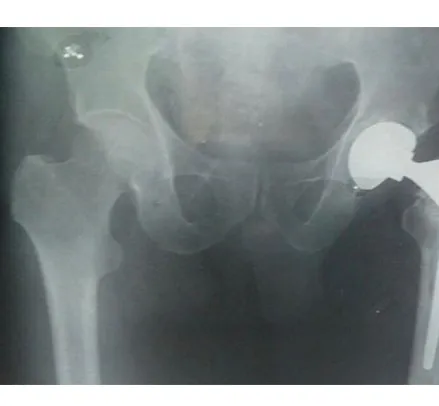
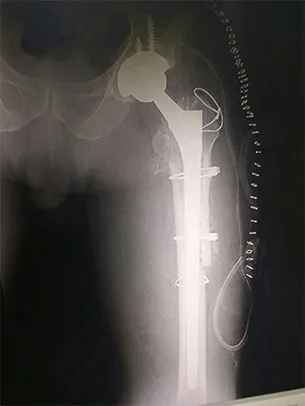
From Dr. Gadkari's own cases. Identifying details have been removed. Every patient's result is different.
Frequently Asked Questions
What is avascular necrosis of the hip?
Avascular necrosis (AVN) means that part of the ball of the hip loses its blood supply and slowly collapses. It is linked to long-term steroid use, heavy alcohol use and some injuries, and it often affects younger adults. Early AVN can sometimes be treated without replacement; advanced AVN usually needs a total hip replacement.
Are there movements I must avoid after a hip replacement?
For the first few weeks you may be asked to avoid bending the hip too far, crossing your legs and sitting on very low seats or the floor. The exact precautions depend on how the operation was done. Your physiotherapist will show you how to sit, stand, dress and use the toilet safely.
How long does a joint replacement last?
Modern knee and hip replacements last many years. Most are still working well 15 to 20 years after surgery, and many last longer. Keeping a healthy weight and staying active with low-impact exercise such as walking, cycling and swimming helps them last.
Is joint replacement covered by health insurance?
Most health insurance policies in India cover joint replacement when it is medically needed. Check your policy for waiting periods, room-rent limits and any co-payment. The hospital's insurance desk can usually arrange cashless approval before you are admitted.
Book a Consultation
Talk to Dr. Gadkari about hip replacement. Message the clinic on WhatsApp or call, and they will find a time and place that suits you.
Pending Medical Review: Dr. Gadkari has not yet approved this page.