
Tendon & Ligament Injuries: Sprains, Tears and Ruptures
Tendon and ligament injury treatment in Thane for sprains, strains, tears and ruptures, and how to tell when an injury needs more than rest.
Tendons and Ligaments Explained
Tendons and ligaments are strong bands of tissue that hold your body together and let it move.
- Tendons connect muscles to bones. When a muscle tightens, its tendon pulls the bone and moves the joint.
- Ligaments connect bones to each other inside a joint. They keep the joint stable and stop it moving too far.
Both can be stretched, partly torn or completely torn, during sport, a fall, a twist on an uneven step or a road accident. They can also become inflamed from overuse.
Types of Injury
Strain
A strain is an injury to a muscle or its tendon, in which some of the fibres tear. The muscles of the back and thighs, such as the hamstrings, are the most frequent sites.
Sprain
A sprain is an injury to a ligament. The ankle is the most common place, often after rolling the foot inwards. Sprains are graded by how badly the ligament is damaged:
- Grade 1: the ligament is stretched, with mild pain and swelling.
- Grade 2: the ligament is partly torn, and the joint may feel loose.
- Grade 3: the ligament is completely torn, and the joint is unstable.
Tendon Rupture
A tendon rupture is a partial or complete tear of a tendon. The Achilles tendon at the heel is a common site. Many ruptures need tendon repair surgery.
Tendinitis
Tendinitis, sometimes called tendinopathy, is irritation and inflammation of a tendon caused by overuse. It mainly affects the shoulder, heel, knee, elbow, wrist and hip. Tennis elbow is a familiar example.
Bursitis
Bursitis is inflammation of a bursa, a small fluid-filled sac that reduces friction between a tendon and a bone. The shoulder, elbow, hip, knee and foot are common sites.
Common Ligament Tears
- ACL tear in the knee, often from a twisting sports injury, with a pop and fast swelling.
- Ankle ligament tears, after a bad sprain.
- Rotator cuff tears in the shoulder, which are tendon tears that become more common with age.
Common Symptoms
Typically, a tendon or ligament injury causes:
- Pain of varying strength, described as dull, throbbing or sharp
- Swelling of the area; the faster it appears, the more severe the injury tends to be
- Bruising, whose size also hints at how bad the injury is
- Being unable to use the injured part normally
- Stiffness and loss of movement
First Aid in the First Two to Three Days
For most minor sprains and strains, follow the PRICE steps:
Protect
Stop the activity and protect the injured part from further harm.
Rest
Rest it for the first day or two, using a support or crutches if needed.
Ice
Apply a cold pack wrapped in a cloth for 15 to 20 minutes every few hours. Never put ice directly on the skin.
Compression
A firm, not tight, bandage helps control swelling.
Elevation
Keep the injured part raised above the level of your heart when you can.
Avoid heat, alcohol and vigorous massage for the first two to three days, as they can increase swelling.
How These Injuries Are Diagnosed
Dr. Gadkari examines the joint to see how stable it is and which structures are painful. An X-ray rules out a broken bone, which can feel just like a bad sprain. An ultrasound or MRI scan shows exactly which tendon or ligament is torn and how badly.
Treatment Options
Step 1 of 5
Rest and First Aid
Most mild sprains and strains settle with PRICE and a short break from sport.
Step 2 of 5
Support
A brace, splint or boot protects a more serious injury while it heals.
Step 3 of 5
Physiotherapy
Exercises rebuild strength, balance and movement, and reduce the chance of the joint giving way again.
Step 4 of 5
Injections
For long-standing tendinitis or bursitis that has not settled, an injection can sometimes help.
Step 5 of 5
Surgery
Needed for many complete tendon ruptures, and for some ligament tears where the joint keeps giving way.
Read about surgery
Many tendon and ligament injuries heal well without an operation, given the right support and rehab. Dr. Gadkari explains exactly what is torn, how long it is likely to take to heal, and whether surgery would give you a better result for your work, sport and daily life.
Understand Your Diagnosis
He goes through your X-rays and scans with you, so you know exactly what is wrong and why.
Try Non-Surgical Care
Medicines, physiotherapy, weight and activity changes come first, for as long as they help.
Operate When It Helps
Surgery is advised only when it will clearly improve your pain and daily life.
Before and After X-Rays
Severe Elbow Injury (Terrible Triad)
An elbow dislocation with fractures, treated by replacing the radial head and reconstructing the outer elbow ligament (LCL).
Pending Medical Review
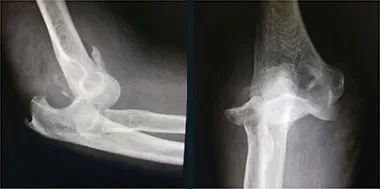
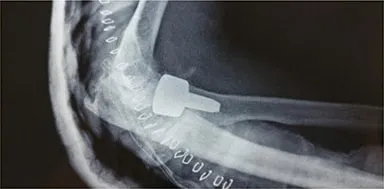
From Dr. Gadkari's own cases. Identifying details have been removed. Every patient's result is different.
“His diagnosis is always spot on, he explains things clearly and patiently, and thanks to him we’ve all recovered really well.”
Read the original Google review, 2025 (opens in a new tab)
Frequently Asked Questions
How long does a sprain take to heal?
A mild sprain often settles in two to three weeks. A more severe sprain, with a partly or fully torn ligament, can take six weeks to three months, and physiotherapy helps prevent the joint from giving way again.
Do I need an X-ray for a sprain?
You need an X-ray if you cannot take four steps on the injured leg, if a bone is tender to press, or if the joint looks deformed. These can be signs of a fracture rather than a sprain.
When does a torn ligament need surgery?
Many ligament injuries heal with a brace and physiotherapy. Surgery is considered when a joint keeps giving way, when several ligaments are torn together, or for an active person with a torn ACL in the knee.
Does every torn Achilles tendon need surgery?
Not always. Some Achilles tears heal well in a special boot with a carefully staged rehab plan. Surgery may be better for active people, late presentations or tears with a large gap. Dr. Gadkari will explain the options and help you choose.
Book a Consultation
Talk to Dr. Gadkari about a tendon or ligament injury. Message the clinic on WhatsApp or call, and they will find a time and place that suits you.
Pending Medical Review: Dr. Gadkari has not yet approved this page.