
Total Knee Replacement
Total knee replacement in Thane replaces the worn surfaces of the knee with smooth metal and plastic parts, to take away arthritis pain and help you walk again.
At a Glance
Pending Medical Review
- Who It's For
- Adults with severe knee arthritis that medicines and physiotherapy no longer control
- Anaesthesia
- Spinal anaesthesia, usually with a nerve block for pain relief
- Hospital Stay
- Usually 4 to 5 days after the operation
- Walking Again
- With a walker within a day or two
- Full Recovery
- Walking without support in 6 weeks to 3 months; improvement continues for up to a year
Typical figures. Your own plan depends on your health, age and the joint involved.
What Is Total Knee Replacement?
Total knee replacement, also called total knee arthroplasty, is an operation in which the worn out or damaged surfaces of the knee joint are removed and replaced with an artificial joint (a prosthesis).
Your knee is a hinge where three bones meet: the thighbone, the shinbone and the kneecap. Each is covered with smooth cartilage that lets the joint glide. When arthritis wears that cartilage away, bone rubs on bone. That is what causes the deep, grinding pain, the swelling and the stiffness that make stairs, walking and getting up from a chair so hard.
In a knee replacement, the damaged ends of the thighbone and shinbone are shaped and capped with metal parts. A tough medical plastic spacer sits between them so the new joint moves smoothly. Sometimes the back of the kneecap is resurfaced too. Your own muscles and most of your ligaments stay in place and keep working.
Is This Right for Me?
Total knee replacement is most often advised for severe osteoarthritis of the knee, the common form of arthritis in which the joint cartilage gradually wears away. It often affects older people. Your doctor may advise a knee replacement if you have:
- Severe knee pain that limits your daily activities, such as walking, getting up from a chair or climbing stairs
- Moderate to severe pain while resting, or pain that wakes you at night
- No lasting relief from medicines, injections, physiotherapy or other treatments
- A knee that is slowly bending outwards or inwards (bow legs or knock knees)
- X-rays that show the cartilage space in the joint has worn away
Not sure? Book a consultation to have it checked.
Rheumatoid arthritis, an old knee injury, or a fracture that healed badly can damage the knee in the same way, and a replacement can help in these cases too.
Dr. Gadkari’s Approach
Choosing a knee replacement is a big decision, and it is yours to make. Dr. Gadkari first checks whether medicines, physiotherapy, weight loss, a knee brace or an injection can still give you good relief. He recommends surgery only when arthritis is limiting your life and simpler treatments have stopped working.
He will go through your X-rays with you, explain what the operation can and cannot do, and answer your family’s questions. If only one part of your knee is worn, he will tell you whether a partial knee replacement could be an option instead.
Understand Your Diagnosis
He goes through your X-rays and scans with you, so you know exactly what is wrong and why.
Try Non-Surgical Care
Medicines, physiotherapy, weight and activity changes come first, for as long as they help.
Operate When It Helps
Surgery is advised only when it will clearly improve your pain and daily life.
The Surgery, Step by Step
Getting Ready
You will have blood tests, an ECG and a check-up with a physician to make sure you are fit for surgery. Usually you are admitted to hospital the day before the operation.
Anaesthesia
Most knee replacements are done under spinal anaesthesia, which numbs you from the waist down. A nerve block is often added to keep the knee comfortable for many hours afterwards. You can be given medicine to sleep through the operation.
Removing the Worn Surfaces
Through a cut at the front of the knee, the damaged cartilage and a thin layer of bone are removed from the ends of the thighbone and shinbone, using precise guides.
Fitting the New Joint
The metal parts are fixed to the bone, usually with bone cement, and the plastic spacer is placed between them. The knee is then tested to check that it bends fully, straightens fully and is balanced and stable.
Closing and Pain Control
Local anaesthetic is injected around the knee before the wound is closed. This, with the nerve block, keeps pain low in the first day.
First Steps
Physiotherapy starts early. Most people stand and take their first steps with a walker on the day after surgery.
Your Recovery Timeline
Day 1
Standing and taking your first steps with a walker, with your physiotherapist beside you.
Days 4 to 5
Home from hospital once you can walk safely with a walker, manage a few steps and your pain is controlled.
Week 2
Stitches or clips removed. Daily exercises to bend and straighten the knee.
6 Weeks to 3 Months
Most people walk without a walker or stick and return to light daily activities.
Up to 1 Year
Strength, comfort and stamina keep improving.
Typical milestones. Everyone heals at a different pace, and your physiotherapist will adjust the plan to you.
Common Worries, Answered
It is a major decision to choose total knee replacement surgery, and there are many fears and misconceptions around it. These are the questions patients ask Dr. Gadkari most often.
Will it be very painful?
This is a valid fear. The operation is extensive and involves removing diseased bone, cartilage and soft tissue, so some amount of pain is to be expected. However, with modern techniques of surgery and anaesthesia during and after the operation, including nerve blocks, local anaesthetic mixtures injected around the knee and pain-relief catheters, the pain can be controlled to a great extent.
How long will I stay in hospital?
Usually you are admitted a day before the operation and go home 4 to 5 days after it. The exact length of stay depends on your general fitness, your pain level and the physiotherapy milestones you reach after surgery.
Will I need a blood transfusion?
Most people do not. Your haemoglobin is checked on the day after surgery. If the surgeon or anaesthetist finds that blood loss was high enough to need replacing, blood or blood products may be given.
How long will I need a walker?
Everyone wants to walk without help as soon as possible. In reality, this depends on how fit you were before surgery, the physiotherapy afterwards and the quality of the surgery. Generally, patients take between 6 weeks and 3 months to walk independently, and the knee keeps improving for up to a year.
Can I squat, sit cross-legged or use an Indian toilet?
After a knee replacement, it is generally advised to avoid squatting and Indian-style toilets. Deep squatting puts heavy, repeated stress on the bones and the implant, and in the early months your muscles may not yet have the strength and balance to keep you stable, so you could fall and break a bone. A western toilet, or a raised seat or commode chair over an Indian toilet, is safer. Ask Dr. Gadkari about sitting on the floor, as this depends on how well your knee bends.
Will I manage the stairs at home?
Yes. Before you leave hospital, your physiotherapist will teach you to climb stairs safely using a handrail: the stronger leg leads going up and the operated leg leads coming down. If your home has many stairs and no lift, tell the team early so they can plan your recovery.
Risks Explained Plainly
Knee replacement is one of the most successful operations in medicine, but every operation carries some risk. Dr. Gadkari will go through yours before you decide. The main ones are:
- Infection in the wound or around the new joint. Sterile operating theatres and antibiotics make this uncommon.
- Blood clots in the leg veins. Getting up early, leg exercises and blood-thinning medicines reduce this risk.
- Stiffness, if the knee is not exercised enough in the first weeks. Regular physiotherapy prevents most stiffness.
- Ongoing aches or numbness around the scar, which often fade over months.
- Wear or loosening of the implant after many years, which may need a revision operation.
Your own risk depends on your age, weight and other conditions such as diabetes or heart disease, which is why a full check-up comes before surgery.
Before and After X-Rays
Total Knee Replacement
Worn-out knee joints from arthritis, and the knee after a total knee replacement.
Pending Medical Review
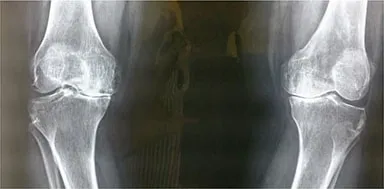
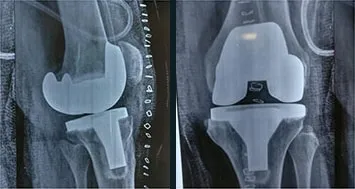
From Dr. Gadkari's own cases. Identifying details have been removed. Every patient's result is different.
“Your skill, dedication, and compassionate approach have made a remarkable difference in my recovery and overall well-being.”
Read the original Google review, 2025 (opens in a new tab)
Frequently Asked Questions
How long does a joint replacement last?
Modern knee and hip replacements last many years. Most are still working well 15 to 20 years after surgery, and many last longer. Keeping a healthy weight and staying active with low-impact exercise such as walking, cycling and swimming helps them last.
Can both knees be replaced at the same time?
Yes, for some patients. Replacing both knees in one operation means one hospital stay and one recovery, but it is a bigger operation. Dr. Gadkari decides this with you and your physician based on your heart, lungs and general health.
Am I too old or too young for a knee replacement?
There is no fixed age. The decision depends on how much the arthritis limits your life and on your general health, not on age alone. Most people who have a knee replacement are over 60, but younger people with severe arthritis can also benefit.
Can I kneel after a knee replacement?
Many people can kneel once they have recovered, although it may feel unusual or uncomfortable at first, even when the knee is healing well. Your ability to kneel depends on healing, strength and comfort. Start on a soft surface once your surgeon says it is safe.
Is joint replacement covered by health insurance?
Most health insurance policies in India cover joint replacement when it is medically needed. Check your policy for waiting periods, room-rent limits and any co-payment. The hospital's insurance desk can usually arrange cashless approval before you are admitted.
Book a Consultation
Talk to Dr. Gadkari about total knee replacement. Message the clinic on WhatsApp or call, and they will find a time and place that suits you.
Pending Medical Review: Dr. Gadkari has not yet approved this page.