
Floor Sitting, Squatting and Your Knees
Floor meals, squatting and sitting cross-legged are part of everyday Indian life, and they ask a lot of your knees. How to protect your joints without giving up what matters to you.
Share on WhatsAppIf you grew up in an Indian home, chances are your knees have done some serious work.
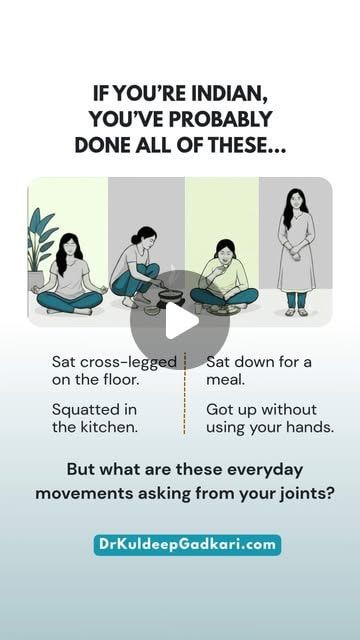
Floor meals. Squatting in the kitchen. Sitting cross-legged at prayers and family gatherings. Getting up from the floor without using your hands. These are not exercises for most of us. They are everyday life.
That is why joint health in India is not just about being able to walk. It is about being able to keep doing the things that matter to you.
What These Movements Ask of Your Knees
Deep bending. Squatting and sitting cross-legged bend the knee much further than walking or climbing stairs. In a deep bend, the pressure on the cartilage at the back of the kneecap and between the thighbone and shinbone rises sharply.
Twisting. Sitting cross-legged twists the knee as well as bending it, which loads the meniscus, the knee’s shock absorber.
Getting up. Standing up from the floor without using your hands needs strong thigh and hip muscles and good balance.
A healthy knee handles all of this well. But when the cartilage has started to wear, as in osteoarthritis, or the meniscus is torn, these deep, twisting positions are often the first movements to hurt.
Signs Your Knees Are Struggling
- Pain or stiffness when you get up after sitting on the floor
- Needing your hands, or someone’s help, to stand up
- Pain on the inner side of the knee when sitting cross-legged
- Catching or clicking when you squat
- Swelling after a long puja, a wedding or a day of floor seating
These signs do not mean you must stop. They mean your knees need some help.
How to Protect Your Knees
Use a low stool or a chair when you can. Save floor sitting for the occasions that matter most to you, and use support on ordinary days.
Get up the easy way. Turn onto your hands and knees, bring one foot forward, and push up with your hands on a stable support.
Strengthen your thighs. Strong thigh muscles take load off the knee joint. Simple exercises such as straight leg raises and sitting to standing from a chair, done daily, make a real difference.
Keep a healthy weight. Every extra kilo is felt many times over by your knees when you squat and climb stairs.
Choose a western toilet if squatting hurts. Or use a raised seat over an Indian toilet.
Stay active. Walking, cycling and swimming keep the knee moving without heavy twisting.
When to See a Doctor
See a doctor if knee pain is stopping you from doing what you enjoy, if the knee swells, locks or gives way, or if pain wakes you at night. Many knee problems can be eased a great deal without surgery, especially when treated early.
Read more about knee pain and arthritis, or book a consultation to find out what is happening in your knees.
General information, not advice for your own joint. See our medical disclaimer.
Book a Consultation
Talk to Dr. Gadkari about knee pain. Message the clinic on WhatsApp or call, and they will find a time and place that suits you.
Pending Medical Review: Dr. Gadkari has not yet approved this page.