
Getting Up From a Chair After Knee Replacement
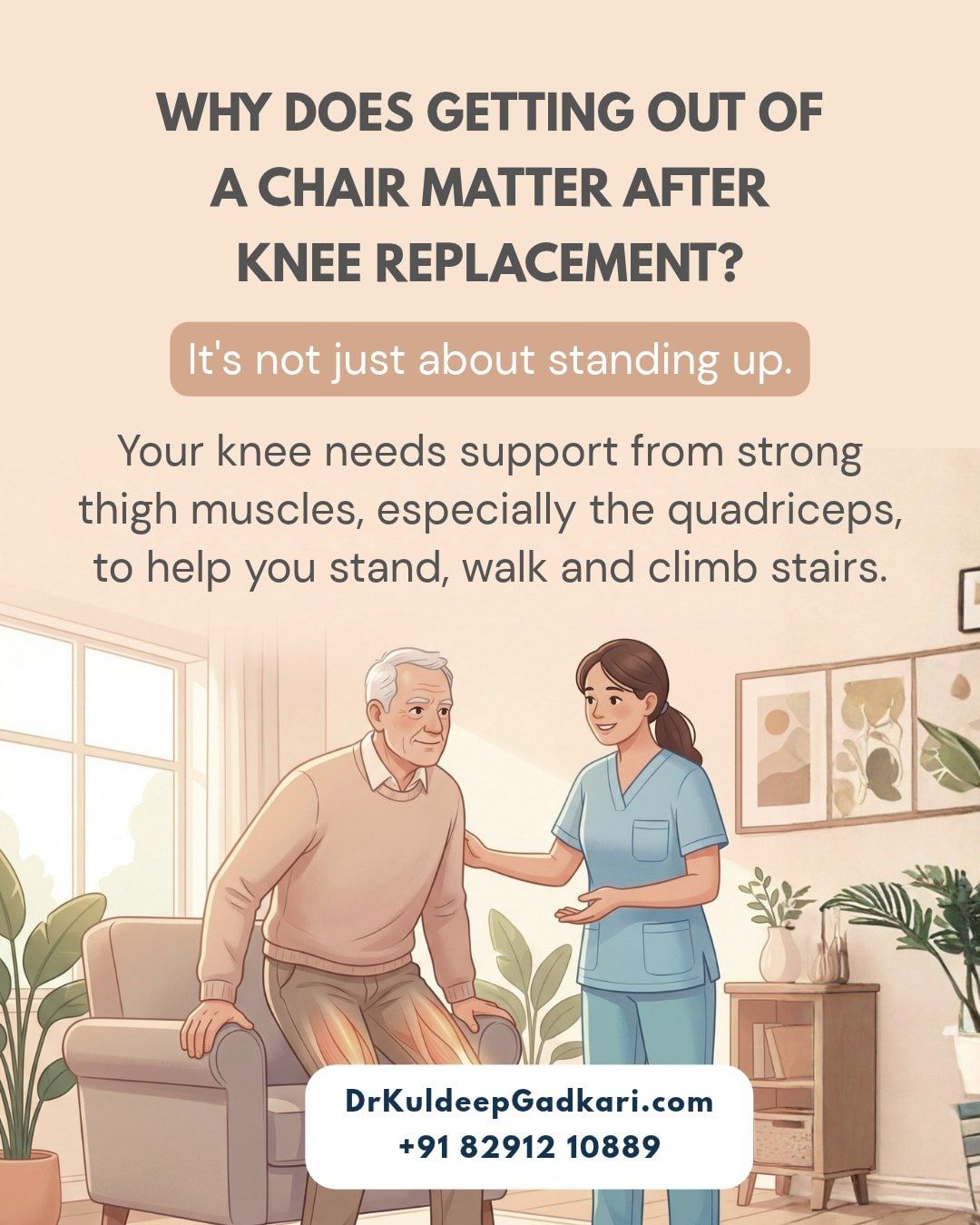
Getting up from a chair may seem like a small thing, but after a knee replacement it is a real milestone. Why your thigh muscles matter, and how rehab builds them back.
Share on WhatsAppGetting up from a chair may seem like a small thing. But after a knee replacement, it can be a big milestone.
A Knee Replacement Changes the Joint, Not the Muscles
A knee replacement replaces the damaged surfaces of the joint. It does not replace the muscles around your knee. Those muscles still need to:
- Support your knee
- Help you balance
- Help you climb stairs
- Help you get up from a chair
- Help you walk confidently
Your thigh muscles, especially the quadriceps at the front of the thigh, do much of this work. Before surgery, years of knee pain often mean these muscles have become weak, because people naturally avoid using a painful leg. After surgery, swelling and pain can switch them off further for a while.
That is why rehabilitation is such an important part of recovery. The surgery changes the joint. Rehabilitation helps you use it.
Why Standing Up Is a Good Test
Standing up from a chair needs your knee to bend enough to get your feet under you, your thigh muscles to be strong enough to push you up, and your balance to be steady enough to stay up. When you can do it smoothly, without pushing hard with your arms, it is a sign that the knee and the muscles around it are working together again.
How Rehab Builds the Strength Back
Your physiotherapist will set exercises for your stage of recovery. Common ones include:
- Thigh tightening: lying or sitting with the leg straight, press the back of the knee down and hold for a few seconds.
- Straight leg raises: with the knee straight, lift the leg a little off the bed and lower it slowly.
- Knee bends: sliding the heel towards you on the bed, then back out.
- Sit to stand: from a firm chair with arms, stand up and sit down slowly, using your arms less as you get stronger.
- Mini squats and step-ups: later in recovery, holding on to a support.
Little and often works best. A few minutes several times a day is better than one long session.
Making It Easier at Home
- Choose a firm chair with arms, at a height where your hips are higher than your knees. Avoid low sofas and floor seating in the early weeks.
- Shuffle to the front of the chair first, with your feet slightly apart and under you.
- Lean forward, “nose over toes”, before you push up.
- Keep the operated leg slightly forward at first if bending is still limited.
- Use a raised toilet seat if your toilet is low.
Be Patient With Yourself
Every recovery is different. Some people stand up from a chair easily within a few weeks; for others it takes longer. Steady progress matters more than speed. If you are struggling, or your knee is not bending enough, talk to your physiotherapist or to Dr. Gadkari.
Read more about total knee replacement and what to expect in recovery.
General information, not advice for your own joint. See our medical disclaimer.
Book a Consultation
Talk to Dr. Gadkari about knee replacement. Message the clinic on WhatsApp or call, and they will find a time and place that suits you.
Pending Medical Review: Dr. Gadkari has not yet approved this page.